


When Esi accepted her new role at a growing company in Accra, she couldn’t stop smiling.
After months of applications, interviews, and waiting, she had finally landed the opportunity she had been praying for. She called her parents first. Then her closest friends. The future suddenly felt brighter.
Her first day at work was everything she had hoped for.
Her manager welcomed her warmly. Her teammates were supportive. As she left the office that evening, she couldn’t wait to build a career with a company she was proud to join.
Then, just three days later, life happened.
Her son’s school called.
He couldn’t continue classes unless an outstanding balance of GHS 680 was settled before the end of the week.
Almost at the same time, her mother needed medication that wasn’t fully covered by insurance.
Esi checked her bank account.
Her first salary was still more than three weeks away.
She wasn’t irresponsible.
She wasn’t living beyond her means.
She hadn’t made poor financial decisions.
She had simply found herself caught between life’s responsibilities and the calendar.
Like many employees, she was faced with impossible choices.
Should she borrow from friends?
Take a high-interest mobile loan?
Delay paying for one responsibility so she could meet another?
Or carry the stress quietly and hope everything somehow worked itself out?
The Financial Burden Employers Rarely See
The next morning, Esi arrived at work before everyone else.

She attended meetings.
Responded to emails.
Completed her tasks.
Smiled at her colleagues.
No one would have guessed she had barely slept the night before.
This is what financial stress often looks like.
It doesn’t always show itself through missed deadlines or obvious signs of frustration.
Sometimes, it hides behind professionalism.
Behind the employee who never complains.
Behind the team member who continues showing up every day while carrying an invisible burden.
Financial Wellbeing Is More Than a Personal Issue
Across Ghana, thousands of hardworking employees face similar situations every month.
Unexpected school fees.
Medical emergencies.
Family obligations.
Transport costs.
Rent.
These aren’t rare events.
They’re part of everyday life.
While many organisations have made tremendous progress in supporting mental health, physical wellbeing, and professional development, financial wellbeing is still a conversation that many workplaces have yet to embrace.
Yet the connection is clear.
When employees are consumed by financial pressure, it becomes harder to concentrate, make sound decisions, collaborate effectively, and bring their best selves to work.
This isn’t because they care less about their jobs.
It’s because they’re trying to solve life’s most urgent problems while also meeting professional expectations.
What If We Looked at Employee Benefits Differently?
Perhaps the future of employee benefits isn’t about offering more perks.
Perhaps it’s about solving real problems that employees face every day.
Benefits that reduce unnecessary stress.
Benefits that provide flexibility when life becomes unpredictable.
Benefits that give employees peace of mind when unexpected expenses arise.
Organisations that invest in financial wellbeing aren’t simply introducing another workplace benefit.
They’re building trust.
Strengthening loyalty.
Supporting productivity.
And creating workplaces where people can focus on doing their best work because they know they have support when life takes an unexpected turn.
The Conversation We Need to Have
Esi’s story may be fictional, but the reality it represents is not.
Across Ghana, thousands of employees carry invisible financial pressures into work every single day.
As employers continue investing in employee wellbeing, perhaps it’s time to ask a different question.
What if supporting employees’ financial wellbeing wasn’t just an employee benefit—but a business advantage?
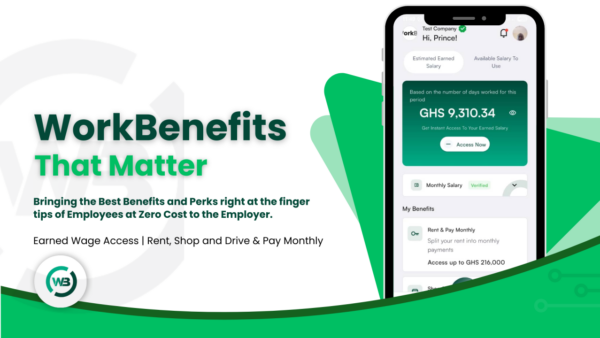
At WorkBenefits, we believe financial wellbeing deserves a place alongside physical and mental wellbeing in every modern workplace.
Because when employees feel supported through life’s unexpected moments, they become more focused, more engaged, and better positioned to succeed.
And when employees thrive, businesses do too.
What do you think?
Should financial wellbeing become a standard employee benefit for organisations in Ghana? We’d love to hear your thoughts and experiences in the comments.